
Conservation and Sustainable Resource Use in Guyana's Kanuku Mountains Protected Area
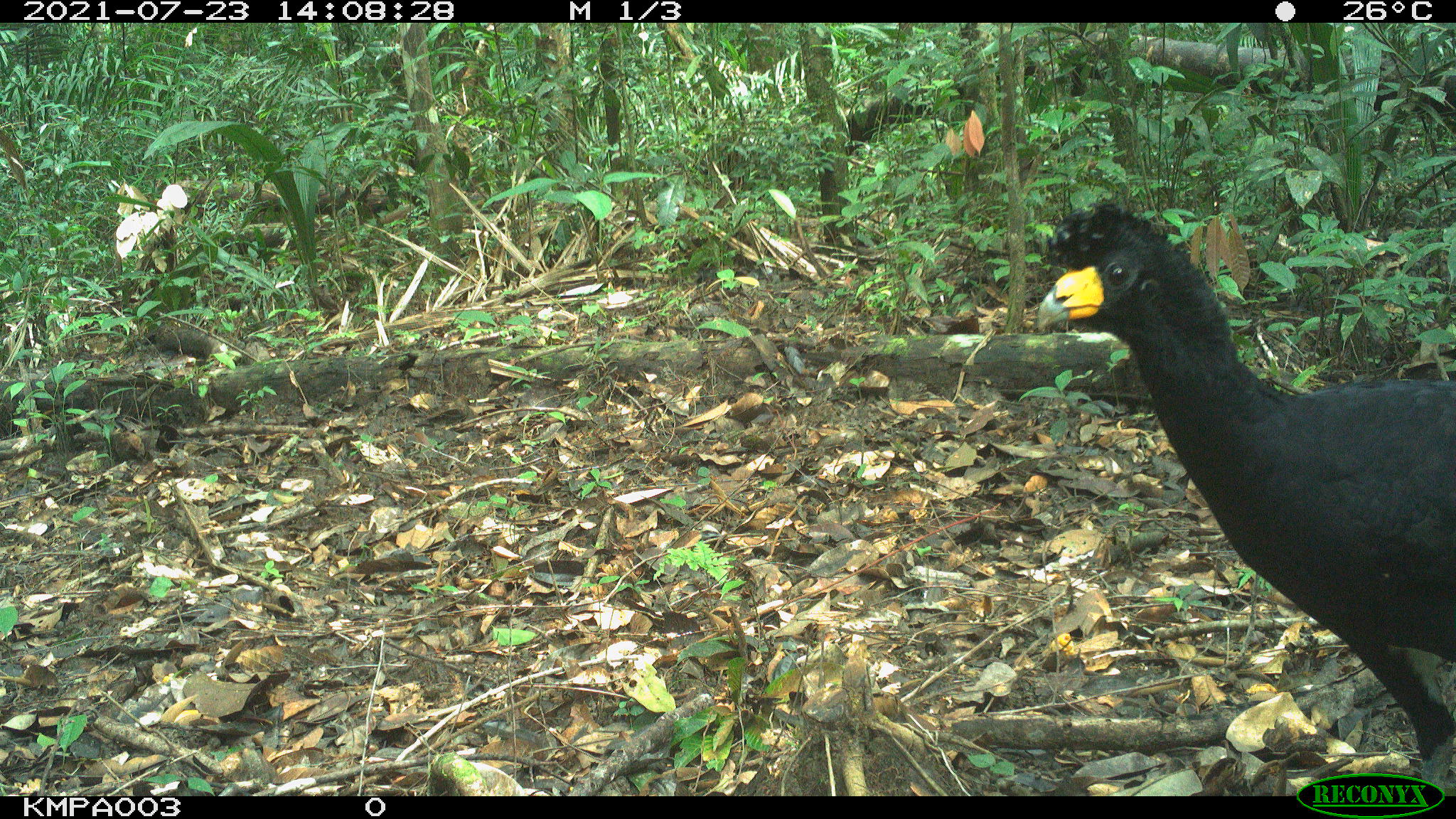
For the Macushi and Wapishana people of southern Guyana, the forests of the Kanuku Mountains have sustained families for generations. Peccaries, tapir, paca, deer — game that feeds communities across one of the most biodiverse landscapes in South America. But as pressure on the land grows, protected area managers and communities face a growing need to ensure hunting practices remain sustainable and wildlife populations thrive for the future.
The Kanuku Mountains Protected Area (KMPA) is supported by the Amazon Sustainable Landscapes Program and covers 611,000 hectares in the Rupununi region of southwestern Guyana, harboring roughly 70% of the country's mammal species and over half its birds. It is managed as a sustainable use area by the Protected Areas Commission (PAC), closely connected to 21 Indigenous communities whose livelihoods depend on the landscape. The KMPA is not only a refuge for wildlife, but also a living landscape where conservation depends on Indigenous knowledge, stewardship, and sustainable use of natural resources.
How Wildlife Insights Helped
To better understand the status of priority wildlife species and whether hunting of key game species remains sustainable for local communities, the PAC team deployed 14 camera traps across a range of habitats including upland and lowland forest, savannah, and wetland mosaics. Over just 6 months of monitoring, the cameras captured more than 130,000 images. Wildlife Insights provided the platform to process and standardize this dataset, enabling consistent species identification and generating the occupancy analyses needed to track population trends over time across a large and logistically challenging landscape.
"Wildlife Insights enabled consistent species identification and improved efficiency in managing the large image dataset — helping ensure comparability across sites and facilitate the synthesis of ecological patterns."
— Rhea Sahai - Protected Areas Officer (Research & Ecological Monitoring Department)
What the Cameras Revealed
The cameras documented 39 species across the survey area, with models suggesting the survey captured the large majority of expected terrestrial vertebrate diversity, a strong baseline for tracking change over time.
The most frequently detected species included a range of small and medium-sized mammals such as nine-banded armadillo, red acouchi, lowland paca, and red-rumped agouti. Larger game species including collared peccary, white-lipped peccary, tapir, and red brocket deer were also consistently recorded. While most game species were found to be stable, many showed moderate or slightly negative trends, suggesting growing pressure on wildlife populations over time. The findings are broadly reassuring that subsistence hunting practices are compatible with maintaining these populations. However, they also highlight the importance of continued community-based management and awareness to ensure harvesting practices can adapt over the long term and prevent future declines.
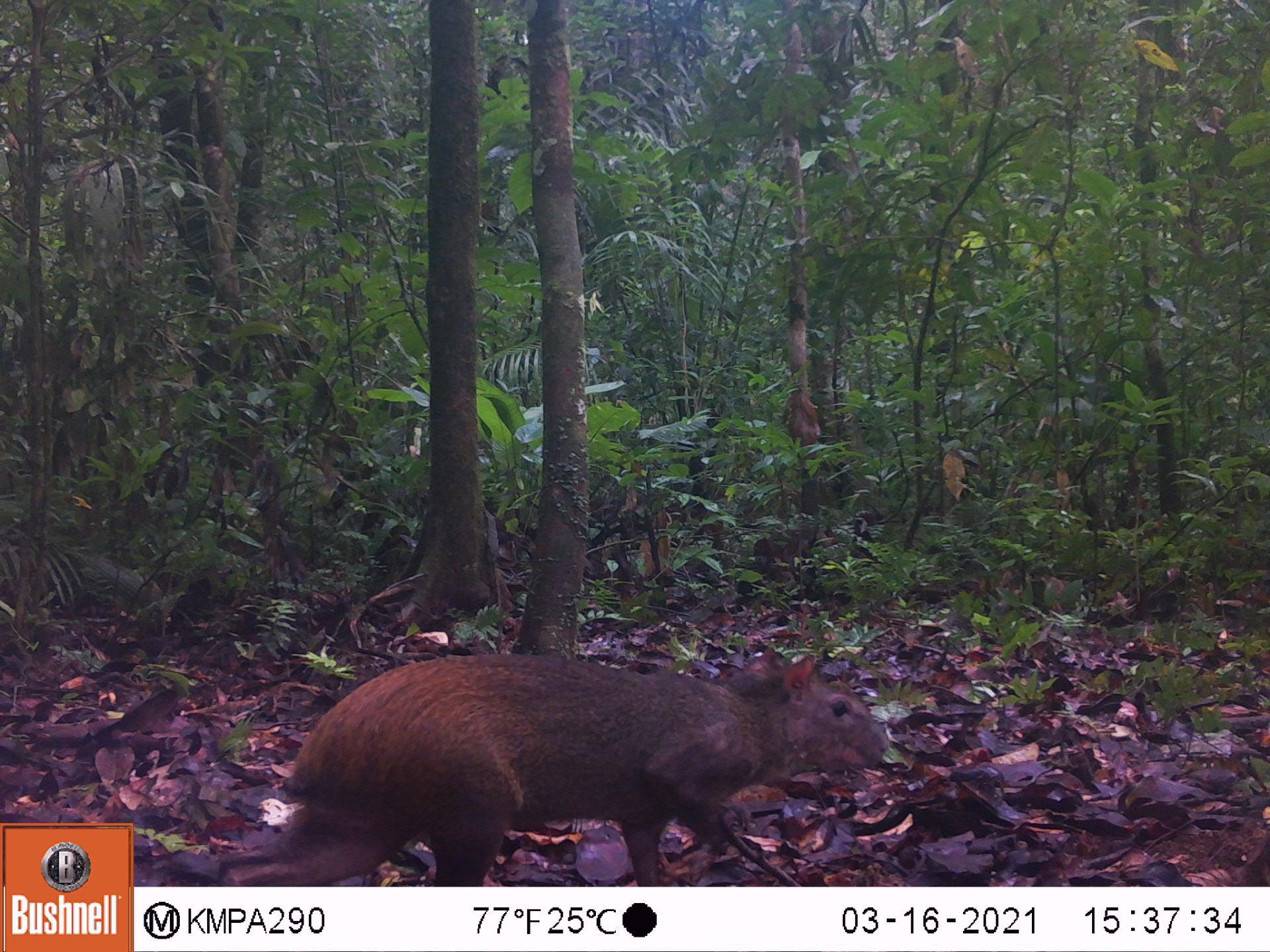
Red-rumped agouti (Dasyprocta leporina), Kanuku Mountains Protected Area
The spatial results added useful detail. Many game species were present across multiple habitat zones, indicating broad ecological tolerance, while others showed stronger associations with specific environments such as forested lowlands and riparian areas. These patterns reinforce the importance of maintaining habitat diversity across the KMPA, as different ecosystems contribute differently to supporting wildlife populations and ecological processes.
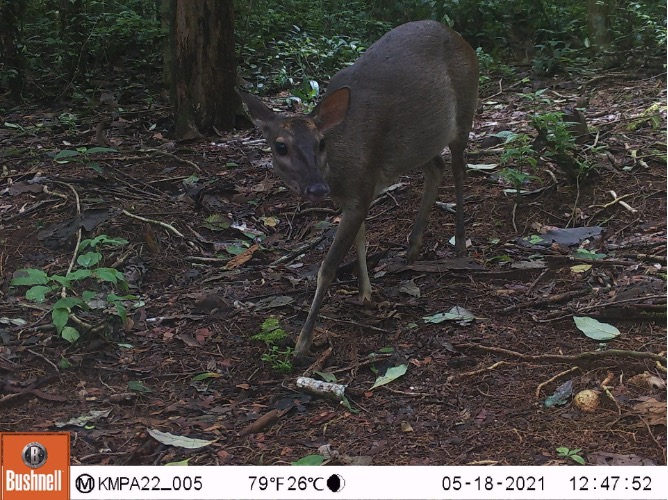
Red brocket deer (Mazama americana), Kanuku Mountains Protected Area
While most game species populations were broadly stable, the black curassow showed a declining occupancy trend. Detection rates were lower than expected for a species that typically thrives in intact forest, with many cameras recording few or no sightings. The curassow's importance as game bird and its role in seed dispersal and forest regeneration, makes its declining trend a signal worth watching closely.
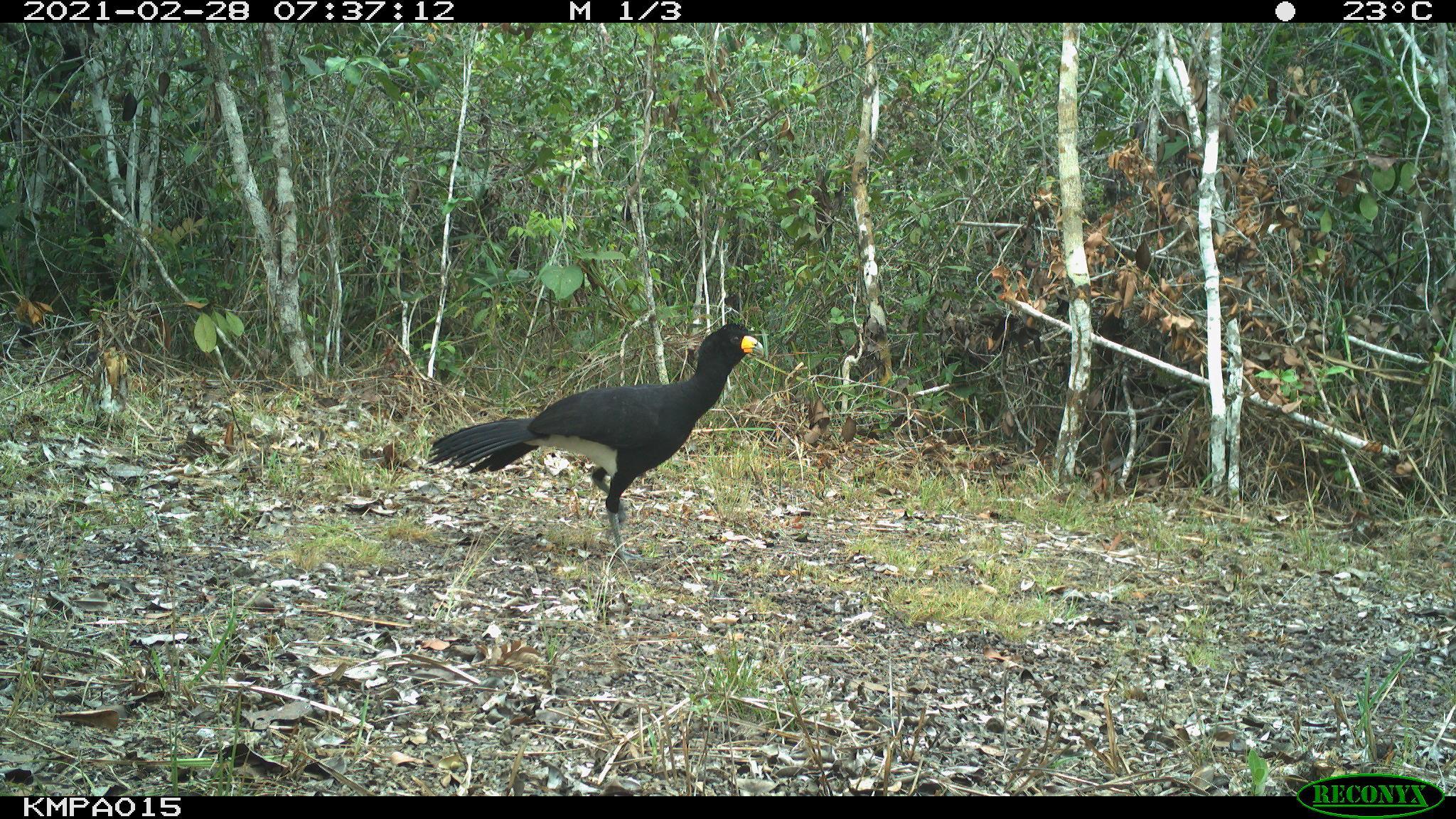
Black curassow (Crax alector), Kanuku Mountains Protected Area
Another notable result was that ocelots showed high detection rates compared to other mid-sized carnivores, suggesting strong suitability of habitat conditions for these small cat species within the protected area.
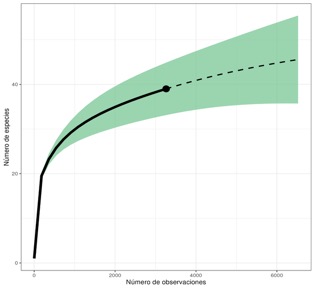
Rarefaction curve for KMPA: registered species as a function of collected observations. The dotted line shows the observed trend; the solid line projects expected diversity with additional sampling.
Why It Matters
These findings highlight the Kanuku Mountains Protected Area as a critically important landscape for conserving game species and biodiversity in southern Guyana, while also supporting the traditional livelihoods of the communities who depend on its natural resources. The stable occupancy of key subsistence species suggests that current community use practices remain broadly compatible with conservation goals, though continued monitoring and adaptive management will be essential to ensure long-term sustainability in a landscape where people and wildlife coexist.
For species like the black curassow, whose populations appear more sensitive to human disturbance, hunting, or habitat changes, continued camera trap monitoring and proactive management will be important to prevent future declines. In addition, strengthening community engagement and reinforcing sustainable harvest practices will be critical to maintaining ecological balance in a landscape where human use and biodiversity conservation are closely interconnected.
The Kanuku Mountains highlight the importance of grounding conservation decisions in real data. By helping track wildlife populations over time, Wildlife Insights is providing the information needed to support both healthy ecosystems and the communities that rely on them.