
Jaguars in the Working Forest: Camera Trap Insights from Jamari National Forest
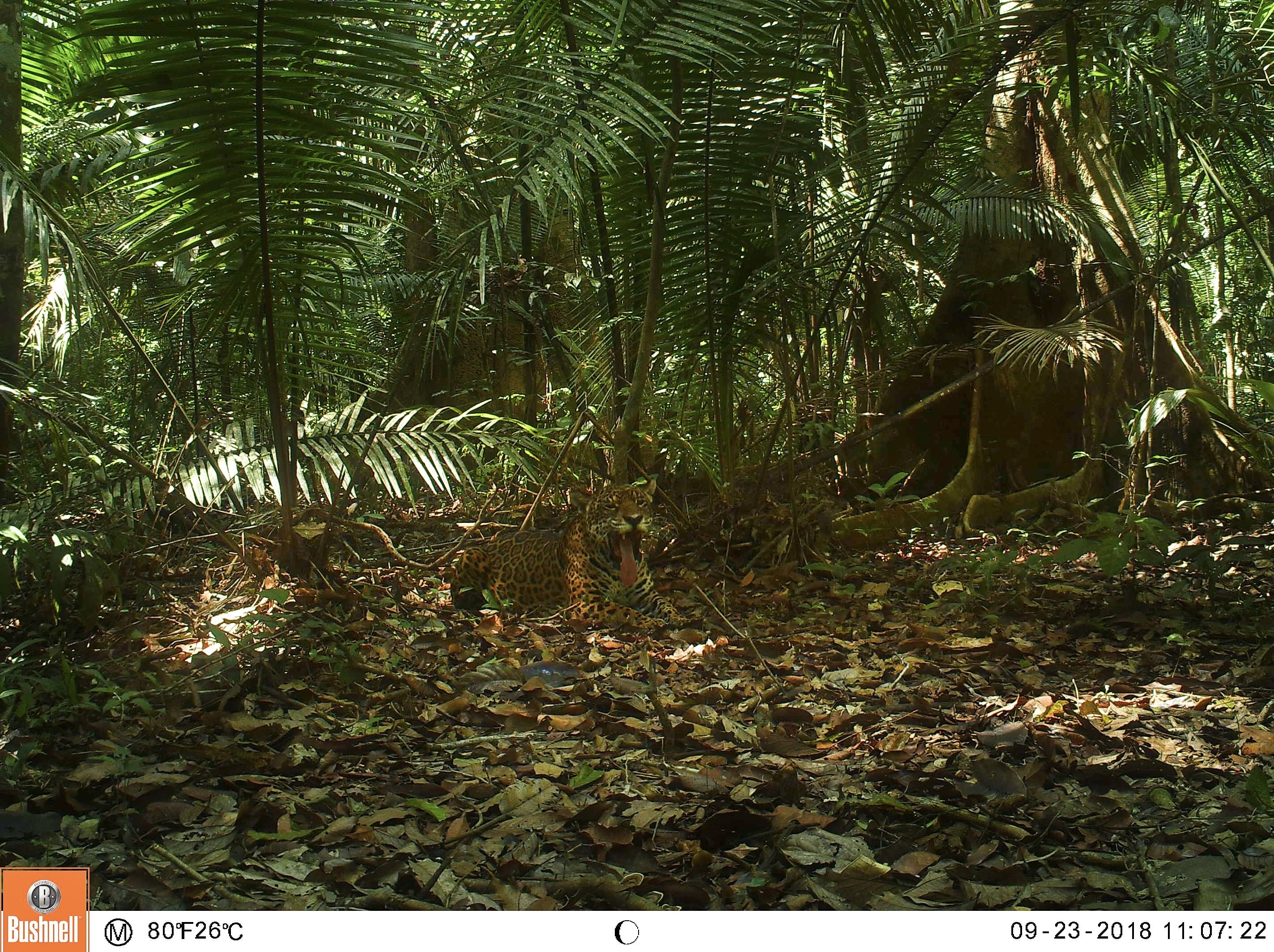
While forest management activities hum through daylight hours in Jamari National Forest, the nights belong to the jaguar.
This is not a sanctuary. The Jamari National Forest, a 223,000-hectare working landscape in the Brazilian Amazon managed by the Chico Mendes Institute for Biodiversity Conservation (ICMBio) and supported by the Amazon Sustainable Landscapes Program, is a sustainable use conservation unit, meaning timber concessions, regulated forest management, and human activity are all part of the picture. What makes Jamari unusual, and important, is the question its camera trap data is beginning to answer: can one of the world's great predators persist alongside a working forest?
The answer, so far, is yes, and the cameras are showing how.
How Wildlife Insights Helped
To find out, ICMBio researchers deployed 100 camera traps across the forest as part of Brazil's National Biodiversity Monitoring Program (Monitora), generating nearly 300,000 images over the course of the survey. Managing that volume systematically across a large, managed landscape with multiple teams required a platform that could handle the scale. Wildlife Insights provided exactly that: a centralized space to upload images, apply standardized species identification, run validation workflows, and move efficiently from raw data to usable results.
"Wildlife Insights was really valuable for turning our raw images into clear, analysis-ready outputs. This made the entire process so much easier and more efficient."
— Vanessa Paiva dos Santos, ICMBio
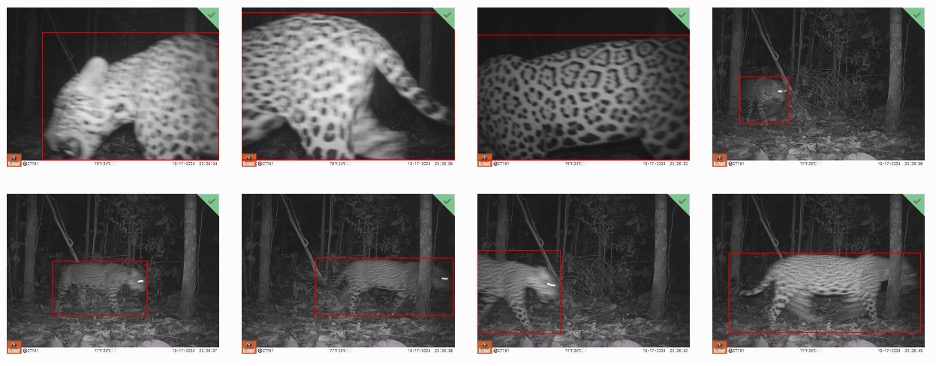
Compilation of jaguar photos (Panthera onca) from Jamari National Forest, identified using Wildlife Insights
What the Cameras Revealed
The cameras confirmed 78 species across the survey area, including the vulnerable jaguarundi (Herpailurus yagouaroundi) and even the arboreal Hoffmann's two-toed sloth (Choloepus hoffmanni) — a reminder that Jamari supports a rich community of wildlife, not just its most iconic resident.
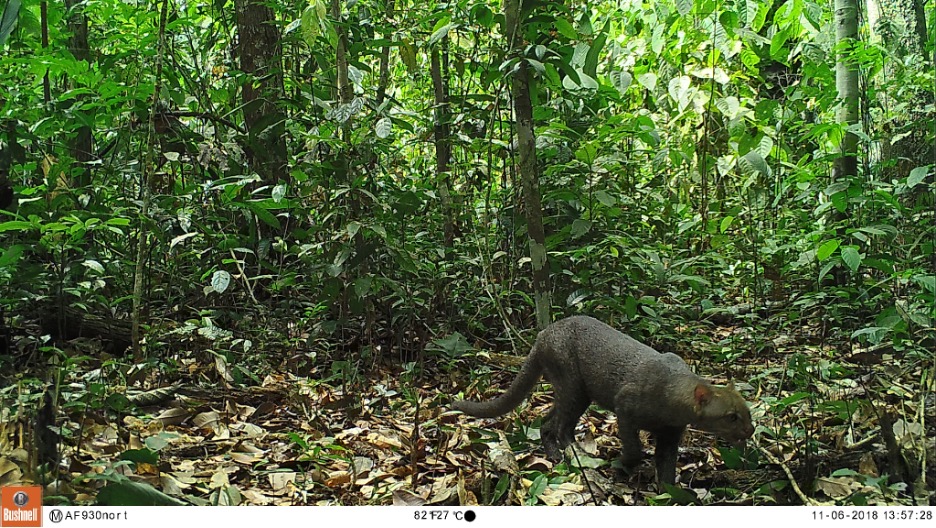
Jaguarundi (Herpailurus yagouaroundi), Jamari National Forest
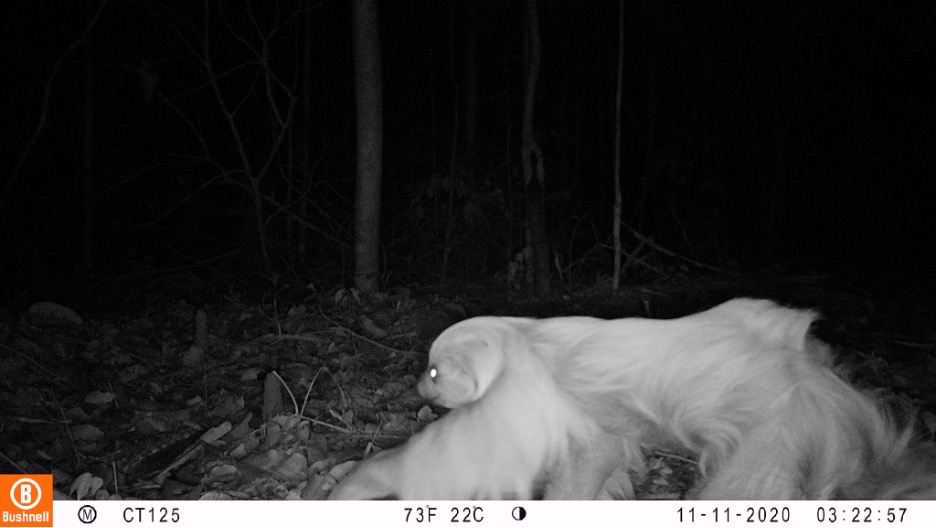
Hoffmann's Two-toed Sloth (Choloepus hoffmanni), Jamari National Forest
But the headline finding was the jaguar. Detections occurred across multiple locations throughout the study area; not just at the edges, but distributed broadly across the landscape. In a forest where logging activities are a regular presence, jaguars are not retreating to some undisturbed corner. They are using the forest.
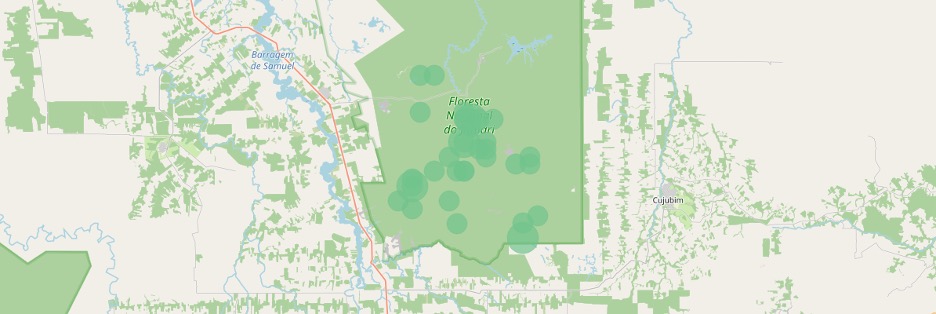
Jaguar (Panthera onca) occupancy across the Jamari National Forest project site
How they are using it, though, tells a more nuanced story. Jaguars in Jamari were almost exclusively recorded outside of normal human working hours. Given that forest management activities, and the associated human presence, are concentrated during daylight hours, this pattern suggests something significant: jaguars may be adapting their behavior to share time with the people who work the forest by day. They are not leaving; they are shifting their schedule.
Whether this represents a learned behavioral response to human activity, or simply reflects the species' natural nocturnal tendencies amplified in a managed landscape, remains an open question. But the pattern is clear, and it is consistent with what behavioral ecologists have observed in other large carnivores navigating human-dominated landscapes, a strategy of temporal rather than spatial separation.
Why It Matters
The presence of jaguars in Jamari is not just ecologically significant, it is strategically important for conservation across the Amazon. Strictly protected areas cover only a fraction of the basin. The vast majority of Amazonian landscapes are working environments: timber concessions, extractive reserves, mixed-use zones, and buffer areas where some level of human activity is permitted or unavoidable. If apex predators can persist in these areas, even adapt to them, it changes the conservation calculus considerably.
What the Jamari data points to are the specific conditions that seem to matter. The broad spatial distribution of jaguar detections highlights the importance of landscape connectivity within the forest. Wildlife trails and riparian corridors, areas where cameras recorded jaguar activity most consistently, are not incidental features. They are the infrastructure that makes coexistence possible: pathways that allow the jaguar to range, hunt, and move without being funneled into conflict with human activity.
The nocturnal behavior pattern adds another layer to this picture. If jaguars are indeed partitioning time with logging operations, maintaining that separation requires predictability such as consistent operational schedules, limited night-time disturbance, and management practices that preserve the behavioral space the jaguar is using. Disrupting that rhythm, even unintentionally, could tip the balance.
Jamari is still early in its monitoring story. Baseline data are in hand, but understanding how jaguar behavior and abundance evolve as forest management intensifies, or as the surrounding landscape changes, will require continued effort. The data collected so far, processed and analyzed with Wildlife Insights, provide exactly the kind of reference point needed to detect those changes before they become irreversible. A working forest and a jaguar can share the same 223,000 hectares. The cameras in Jamari are showing us what that looks like and what it requires.